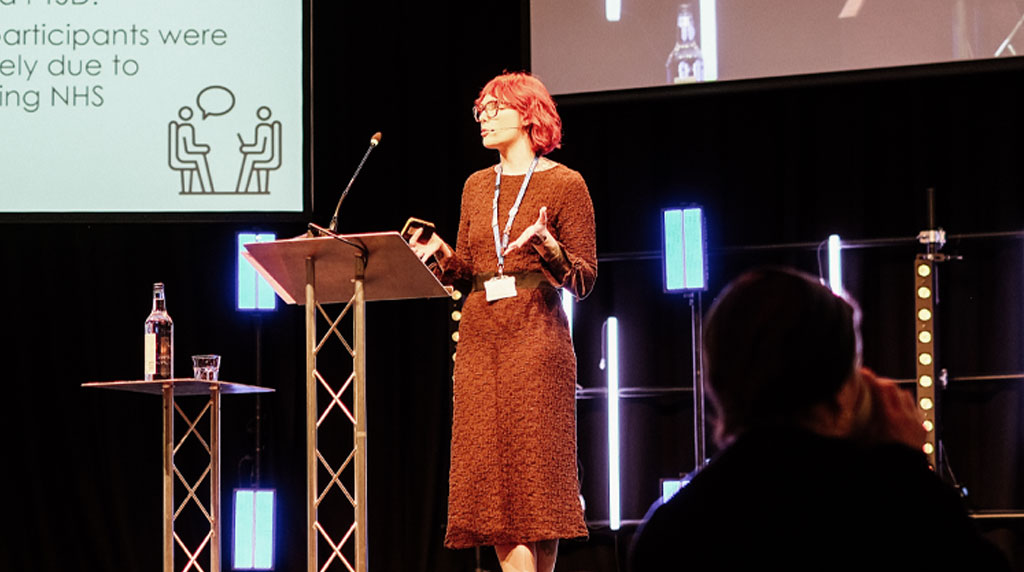
By Anna Senkowska-Gracka (Clinical Administrative Officer)
I have never been a heavy smoker – I used to joke that cigarettes were my ‘bad five-a-day’, and have never seen myself as an addict (despite clearly being one). I started smoking in my late teens and carried on, with breaks of various lengths, for just over two decades. Somehow, I always kept coming back to those five daily cigarettes, occasionally increasing to eight or ten, before then going back to five again. My nicotine addiction never followed a path of slow descent into stronger and stronger dependence but giving up completely seemed like an impossible task for a long while. What was I getting out of that low-level cigarette use? There must have been something that kept me smoking, but maybe it wasn’t just nicotine itself. What type of a smoker was I?
The Social Smoker
Smoking in good company of other smokers adds another irresistible layer to nicotine addiction. The near-instant nicotine hit is combined with a pleasant social atmosphere, good conversation, and maybe a glass of wine held in the other hand. All these go together perfectly. I found social situations particularly challenging – whether it was a get-together with my colleagues before the start of the working day, or parties with multiple smoking breaks with a bunch of friends, when the strangest philosophical discussions happened. The rolling of a fresh cigarette, passing it on, then another one… it felt like a small bonding ritual. I was truly and deeply stuck as a social smoker, and I was probably making it harder for others to quit too.
Then the pandemic happened and lockdowns arrived. With not much face-to-face social interaction, my nicotine cravings reduced. I worked in a frontline role and still remember thinking one day ‘with all this covid around, I’d better give my lungs a chance’. That’s when I quit smoking for good (suddenly) and have been smoke-free since.
Going back to lively socialising, I decided to at least try to be strong and resist temptation. I let my friends know I had quit and asked them to support me in those inevitable moments of weakness. Many of my friends still smoke, but they fully embraced the new, non-smoking version of me.
March 2026 marks six years without nicotine for me. Do I ever feel tempted to go back? Very much so, but I’m still staying strong.
The Creative Smoker
When I was a child, smokers were everywhere. My dad smoked a lot. Strangers smoked in restaurants, on trains, in pubs, in front of hospitals, at bus stops. Public spaces smelled like cigarette smoke all around. Films and TV series were full of writers, poets, adventurers, detectives and even doctors with multiple ashtrays filled with cigarette ends. When I was a bit older, almost all of my most creative friends lived inside the clouds of heavy cigarette smoke filling their homes. I found that nicotine definitely worked for me – maybe I had a single line of a poem swirling in my head for a while, but nothing was crystallising and the process would not move forward at all. Then I’d sit down, smoke a cigarette or two and suddenly a whole poem would be finished in five minutes. The lines would come together, and rhymes appeared effortlessly out of nowhere. I guess inspiration was there from the start, but nicotine gave it a powerful smoke-fuelled engine. When I quit, this was very hard to replace. I found stimulating the senses worked best – essential oils, incense, strong flavours, bright colours. It’s not quite the same, but it’s much, much healthier!
I remember watching a short video on social media recently, showing a cigarette break for non-smokers. Instead of smoking cigarettes, the people who clearly needed a break were… blowing bubbles together. The whole scene looked so funny – somehow a ‘bubble break’ didn’t seem like something that could really be a part of anyone’s working day (imagine asking your boss for a bubble break!) and yet smoking breaks are still quite common. Don’t we all deserve a break from time to time? Smoke-free wellbeing breaks should be a part of everyone’s working day. With or without bubbles.
If you’d like to quit smoking but keep failing miserably every single time – don’t give up; you are facing a substance as addictive as cocaine and heroin, so it’s a really powerful opponent. Try to look for patterns – when is the urge to smoke the strongest? What are you getting out of smoking? Can it be replaced by something else? Maybe you could reduce the amount you smoke by just one cigarette per week and reward yourself when you do? Could other people support you in reaching your goal? Your pharmacist can also help – there are nicotine replacement lozenges, sprays and patches available, and also nicotine-free tablets that may make quitting easier.
For people registered with a GP in Nottingham, there’s a new stop smoking programme available called Gloji Smoke Free which includes free 1-to-1 support with a stop smoking mentor, free nicotine replacement products, digital tools and more. You can find out more here.
Switching to vapes might be a good idea, especially if you can maintain your motivation to keep reducing the nicotine content in the liquid. Some people unfortunately get addicted to the variety of flavours combined with a nicotine hit and find it hard to stop completely – vaping becomes a new daily ritual. While it’s considered significantly less harmful than smoking cigarettes, it is not completely risk-free. If you’d like to read more about transitioning from smoking to vaping, you can read more here.
A smoke-free life starts with a smoke-free day, or even a few hours without a cigarette, or a gradual reduction in the amount you smoke. Every little step matters – you may need quite a bit of creativity, motivation and support on your journey, but you’ll get there in the end.

Reflections on Harmless’ 19th Anniversary
By Caroline Harroe (Harmless CEO) Nineteen years ago, Harmless was born not out of a grand corporate strategy, but out