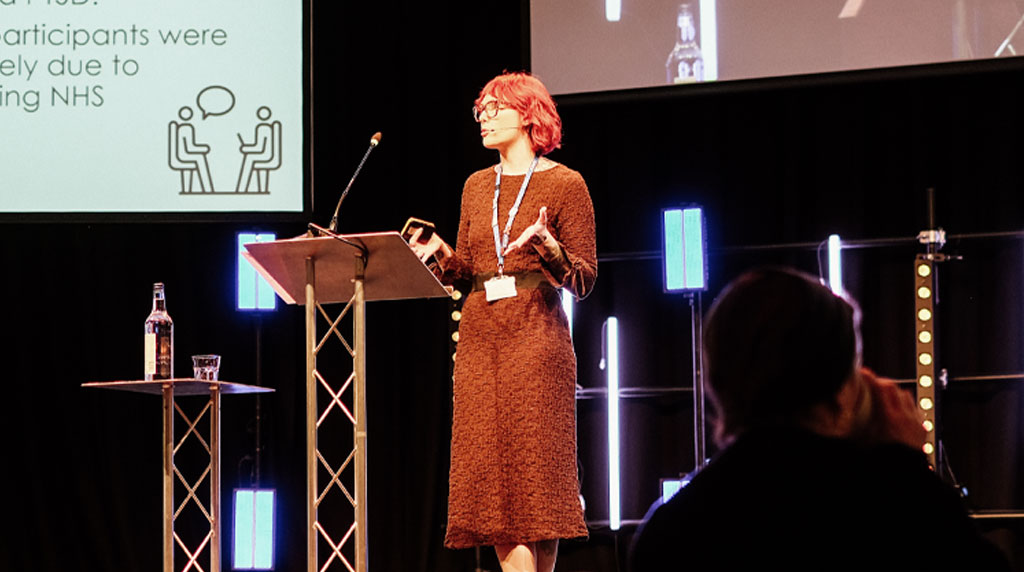
By Caroline Harroe (Harmless CEO)
The public conversation surrounding high-profile tragedies often follows a predictable, comfortable script: ‘Why didn’t they reach out?’ or ‘We need to make sure people get help’.
As a society, we love the slogan. We put it on posters, repeat it during awareness weeks, and post it online whenever a crisis hits the headlines. But those of us who have lived through the sharp end of the mental health system know an uncomfortable truth: asking for help is not the resolution of the problem. Too often, it is merely the entrance to a maze you are expected to navigate blindfolded, while entirely devoid of the cognitive or emotional resources required to survive it.
Getting help is not the same as receiving good care.
When you look past the courtroom specifics of cases like Lindsay Clancy’s and examine the underlying mechanics of what unfolded, the echoes are devastatingly familiar. While that tragedy played out across the American healthcare system, the systemic failings are borderless.
I know this not just as the CEO of an organisation working on the frontline of suicide prevention, but as someone whose own lived experience was forged in that exact crucible.
Before Harmless existed, I was the person being bashed from pillar to post. I lived through the profound trauma of being systematically invalidated, disbelieved and dismissed by the very professionals tasked with my care. I experienced the terrifying reality of being over-medicated to the point where the medication itself made me acutely suicidal. I experienced the casual tick-box assessments where life-ending intent was treated with bureaucratic indifference. I was hospitalised without actual therapeutic intervention and abandoned precisely when I reached acute crisis.
Harmless was born out of the absolute necessity to build something fundamentally different – a clinical service rooted in compassion, immediate access and genuine human connection. Yet every single day, as our clinical team interfaces with the wider health system, we hear the same echoes over and over again.
- Silos and fractured services
People are bounced between disjointed teams who argue over thresholds and diagnostic criteria rather than seeing the human suffering in front of them. - Medication as a blunt instrument
Complex psychological distress, neurodivergence and trauma are repeatedly met with rapid chemical trials and abrupt discontinuations, leaving patients terrified and destabilised. - The illusion of care
Ticking a risk-assessment box or issuing a discharge summary is treated as an intervention, while the underlying crisis remains entirely unaddressed. - The erosion of basic compassion
Patients are frequently met with clinical fatigue – or worse, an outright absence of empathy – where their legitimate expressions of distress are viewed as difficult or manipulative.
We demand an extraordinary degree of resilience from people who are at their most vulnerable. If you are struggling to stay alive, you cannot advocate for your own complex pharmacology. You cannot fight an administrative referral rejection. You cannot survive months on a waiting list while your world collapses around you.
In the last year alone, our services have been 277% oversubscribed. In a statutory healthcare system squashed to breaking point, the easy administrative response is to raise thresholds, close waiting lists, and turn people away.
Instead, we adapted.
We modified our service model so that within a fortnight, someone can walk into something meaningful – to walk in, see a friendly face, and be truly received. When we consider the Clancy case, perinatal mental health is a stark example of why systemic flexibility saves lives. We know that women in the perinatal period rarely present on paper the way traditional risk screening tools expect them to. So rather than demanding that struggling mothers contort themselves to fit our clinical criteria, we changed us. We didn’t expect them to change to access our support; we changed our systems to meet them where they actually are.
Meeting people where they are has meant evolving constantly:
- Showing up anywhere
Standing in the wind and rain at local festivals and football matches to take support out of clinical ivory towers and directly into the community. - Supporting the network
Opening our doors to the family members, partners and friends who carry the immense, exhausting weight of supporting a struggling loved one. - Rebuilding connection
Launching a community choir to restore the very things clinical systems so often strip away – human connection, belonging and shared joy. - Expanding our footprint
Moving into new buildings to ensure our clinical environments feel therapeutic, accessible and safe.
Services must have the courage to change and evolve. Not so fast that we lose our anchor or forget who we are as a clinical service, but responsively, intentionally and in direct dialogue with real-world human need.
Society is comfortable with mental health awareness when it is neat, palatable and easily solved by a conversation. But we fail catastrophically when we ignore the reality of what happens after someone asks for help. We must stop treating ‘reaching out’ as the finish line. Until we overhaul broken pathways, hold services accountable for reckless prescribing, and build systems that adapt to patients rather than gatekeeping them, lives will continue to be lost – not for a lack of asking for help, but because the system they reached for was nowhere near enough.
If you or anyone you know is struggling with self harm, thoughts of suicide or has been bereaved by suicide, support is available. Please reach out to us or make a referral via the button below.
#LindsayClancy #LindsayClancyTrial #ClancyTrial #LindsayClancyCase #PostpartumPsychosis #PPP #PostpartumDepression #PPD #PerinatalMentalHealth #MaternalMentalHealth #Overmedication #PsychiatricMedication #MentalHealthSystem #SI #SH