By Chloe Webster-Harris (Research Coordinator)
Last month, I attended the 10th National Self-Harm and Suicide Early & Mid-Career Researchers Forum in Glasgow, organised by the Suicidal Behaviour Research Lab at the University of Glasgow. It was a fantastic two-day event bringing together researchers, clinicians and practitioners dedicated to understanding and preventing self harm and suicide.
I had brought along my fiancé to chauffeur me from the hotel to the conference, and so we could discover Glasgow in the evenings, visit Loch Lomond and go on some walks… Unfortunately, Scotland seemed determined to welcome us with relentless rain. It was essentially non-stop for the entire two days. I was told that every previous forum had enjoyed beautiful sunny weather, so naturally, the year I attended was the exception. Typical!
Despite the weather, the forum was packed with thought-provoking presentations, meaningful discussions, and opportunities to connect with people who are deeply committed to making life better for others.
Presenting Harmless Research
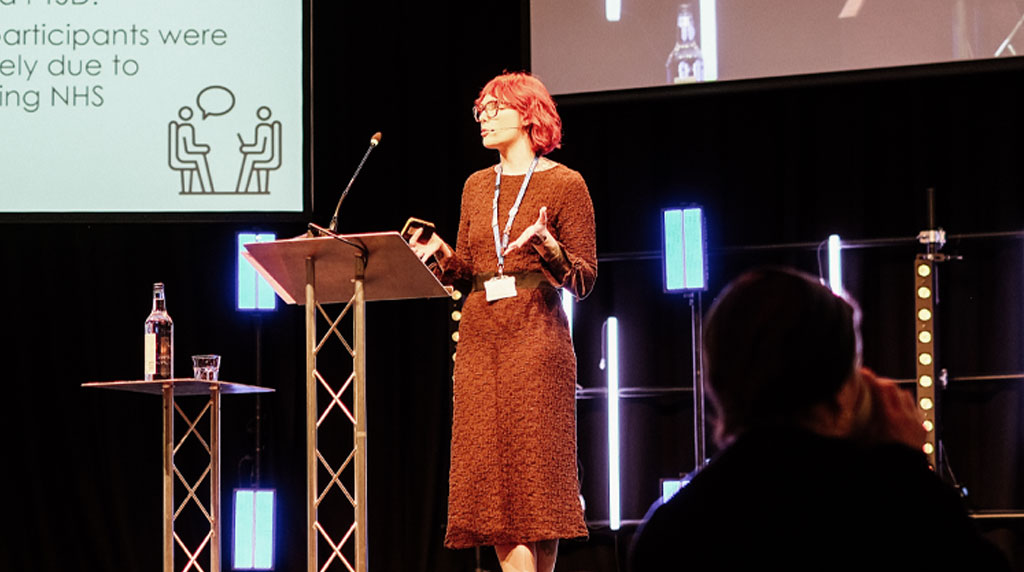
I was fortunate to be able to present my research conducted at Harmless, exploring the effectiveness of stabilisation and integrative therapy on self harm severity and impulsivity.
Our findings showed that self harm severity and impulsive behaviours decreased over time across all participants, including those in a waitlist control group. We also found that neither stabilisation therapy nor integrative therapy was significantly superior to the other.
While this might initially seem surprising, the findings highlight something incredibly important. They suggest that when people are experiencing significant distress, simply knowing that help is coming can have a positive impact. The anticipation of future support appears to reduce self harm behaviours, even before therapeutic intervention begins.
For services working with long waiting lists, this raises important questions about how hope, connection and expectation of support may themselves contribute to recovery.
Learning About Neurodivergence, Suicidality and Trauma
As a neurodivergent woman with lived experience of self harm, I was really glad to see a big focus on neurodivergence, suicidality and trauma at the forum. However, I was also heartbroken as some of the findings presented were deeply concerning. Researchers discussed evidence showing that autistic children as young as four years old can engage in self-harming behaviours, and that approximately one in four autistic children experiences suicidal ideation.
The discussions highlighted the urgent need to rethink how we approach suicide prevention for autistic people. Rather than relying primarily on crisis intervention, prevention efforts must focus on proactive support, community inclusion and creating environments where people can thrive long before they reach crisis point. Suicide prevention is not solely the responsibility of healthcare services. It requires a collective community effort and a neurodiversity-affirming approach.
Activism and Suicide Prevention
One of my highlights of the forum was a wonderful presentation that explored the role of activism in suicide prevention and how activism can both shape and challenge societal responses to suicide. The discussion highlighted concerns that the Online Safety Act is creating barriers for some suicide prevention campaigns, making it more difficult for people to find important information and resources online.
Presenters also examined the different narratives commonly used within suicide prevention campaigns. Some campaigns focus heavily on the individual, promoting messages that imply the person is the problem and that talking is the solution. While seeking support is undoubtedly important, these approaches can overlook the broader social and political factors that contribute to distress.
Other campaigns present suicide as a symptom of wider systemic issues. Examples included campaigns addressing benefit-related deaths and the impact of social policies on mental health. A key criticism was that dominant narratives, particularly those found in mainstream media and many public awareness campaigns, often focus on moments of crisis and encourage help-seeking without addressing issues such as poverty, racism, homophobia, transphobia, discrimination and social exclusion.
The conclusion was not that one perspective is right and the other is wrong. Rather, meaningful change requires both individual and socio-political approaches to come together. Supporting individuals is essential, but so too is addressing the structural conditions that contribute to suffering in the first place.
Liveability: More Than Preventing Death
A recurring theme throughout the conference was the concept of ‘liveability’. Rather than focusing exclusively on preventing suicide, many presenters challenged us to think about what makes life worth living in the first place. This shift in perspective felt particularly powerful. Suicide prevention is, of course, about saving lives. But it is also about ensuring that people have access to meaningful relationships, safe housing, financial security, community belonging and opportunities to flourish.
The goal is not simply to stop people from dying. It is to help create lives that people genuinely want to live.
Rethinking Recovery from Suicidality
Another presentation that stayed with me explored recovery from suicidality.
This study challenged the idea that recovery means reaching a point where suicidal thoughts disappear completely. Instead, they described recovery as gradual, complex and non-linear. Recovery is not about eliminating vulnerability. It is about developing new ways of understanding, responding to, and living alongside difficult thoughts and experiences.
This felt like a particularly important message. Too often, people are led to believe that successful recovery means never having another suicidal thought. For many, this is unrealistic and can create feelings of failure when those thoughts inevitably return. Instead, recovery can involve learning how to navigate those experiences differently, building resilience, strengthening connections and creating a life that feels meaningful despite ongoing vulnerability.
Leaving with Hope
It may seem strange to spend two days immersed in conversations about self harm and suicide and come away feeling hopeful. Yet, somehow, that is exactly how I felt.
I met some of the most wonderful people – researchers, practitioners and advocates who are deeply committed to understanding human suffering and reducing it wherever they can. Their passion, compassion and determination were evident in every presentation and conversation.
The forum reminded me that while the challenges we face are significant, there are countless people dedicating their careers to making life better for others. And perhaps that is why I left Glasgow with hope in my heart.
I want to finish with a quote from a participant involved in one of the studies presented at the conference. It beautifully captures the essence of what so many of the discussions were really about:
‘Recovery from suicidality is not the absence of pain, but the development of a life that becomes liveable again’.

Reflections on Harmless’ 19th Anniversary
By Caroline Harroe (Harmless CEO) Nineteen years ago, Harmless was born not out of a grand corporate strategy, but out